Teacher training
Yoga Teacher Training in Rishikesh: How to Choose the Right School
Rishikesh is where thousands of yoga teachers begin. Here's how to pick a school, a season and an area, from people who live a short drive away.
By the Nestinga team · · 5 min read
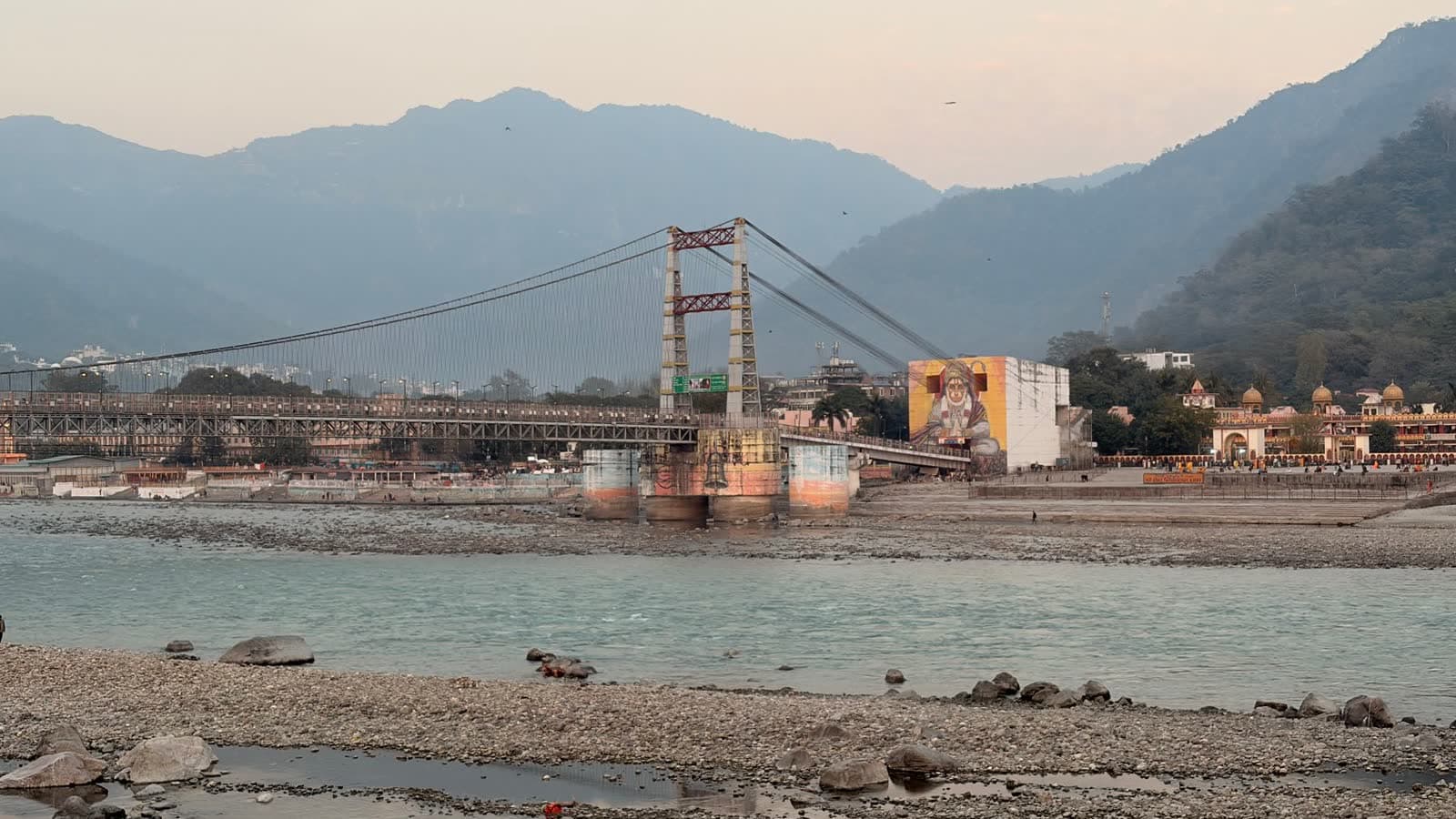
Rishikesh sits where the Ganga leaves the Himalayan foothills and opens onto the plains of Uttarakhand. Since the 1960s it has called itself the yoga capital of the world, and for once the slogan is fair: there are more yoga schools here than almost anywhere on earth, from century-old ashrams to modern shalas with rooftop views of the river. Nestinga is based in Roorkee, a short drive down the road, and this guide is what we tell friends who ask us where to train.
Why train in Rishikesh
- Depth of tradition. Many schools teach the classical Hatha lineage alongside Ashtanga and Vinyasa, with philosophy taught from the Yoga Sutras and the Bhagavad Gita by teachers who grew up with them.
- Value. A residential 200-hour course, with shared accommodation and vegetarian meals, usually costs far less than the same training in Europe, North America or Bali.
- A town built around practice. Rishikesh is largely vegetarian and alcohol-free. Mornings start with chanting from the ashrams, evenings with the Ganga aarti on the ghats.
- Choice. Whatever style you want to teach, from Hatha and Ashtanga to Kundalini and Yin, someone here specialises in it.
When to go
- February to April: pleasant days and cool mornings; the International Yoga Festival takes place in March. This is the busiest season for trainings.
- May and June: hot, often above 38°C in the afternoon. Some schools close or run fewer courses.
- July to September: monsoon. Heavy rain, lush hills and fewer students; mountain roads can close after landslides.
- October and November: our favourite months. Clear skies after the rains, comfortable days and the Himalaya often visible.
- December and January: quiet and cold, with mornings near 5°C. Pack layers: many halls aren't heated.
Where to stay: the main areas
Tapovan is the busiest yoga neighbourhood, up the hill from Laxman Jhula, full of cafés and schools. Laxman Jhula and the riverside lanes below it are lively and walkable. Ram Jhula and Swarg Ashram are home to the large traditional ashrams and the most atmospheric evening aarti. Schools a little outside town, towards the forest, are quieter and closer to nature but further from cafés and shops. Ask any school exactly where its rooms and shala are, and how far you'll walk each morning.
Certification: Yoga Alliance and beyond
Most international students want a course registered with Yoga Alliance, the US-based registry. A Yoga Alliance–registered school (RYS 200) lets graduates register as an RYT 200, which studios in many countries ask for. It's a registry, not a licence: no government requires it to teach yoga, but it's the most widely recognised credential.
India also has its own Yoga Certification Board, under the Ministry of Ayush, with certification levels for instructors and teachers. Some Rishikesh schools prepare students for both. If you plan to teach in India, ask about it.
Read our guides to the 200-hour yoga teacher training and the 300-hour training for what each level covers.
What a typical day looks like
A residential 200-hour course in Rishikesh usually runs for three to four weeks, six days a week:
- Early morning: pranayama, meditation or mantra.
- A long asana class, often two hours.
- Breakfast, then anatomy, alignment or teaching methodology.
- Lunch and a rest during the hottest hours.
- Philosophy, then a second practice or teaching practice in small groups.
- Evening meditation, kirtan or the Ganga aarti, and lights out early.
How much it costs
As a rough guide, a 200-hour residential training in Rishikesh costs around USD 1,000 to 2,500, usually including tuition, a shared or private room, three vegetarian meals a day and course materials. Private rooms, air conditioning, smaller groups and well-known lead teachers push the price up. Flights, visas, travel insurance and the transfer from the airport are usually extra. See our guide to what a yoga retreat costs for the full picture.
Questions to ask a school before you book
- Who teaches each subject, and for how many of the contact hours? Ask for the lead trainers' own training and teaching years.
- How big is the group? Under 20 students means more personal feedback.
- Is the course registered with Yoga Alliance, and under which school name?
- What exactly is included: room type, meals, books, excursions, airport pickup?
- What happens if you fall ill or have to leave early? Read the cancellation policy shown on the listing.
- How do they support students after graduation?
On Nestinga you can send these questions to the school before booking: open a listing and use Ask the host. Your contact details are shared only when you choose to send an enquiry.
Getting there
The nearest airport is Jolly Grant Airport in Dehradun, about 20 km away, with flights from Delhi and other Indian cities. From Delhi it's also around five to seven hours by road, or a train to Haridwar followed by a 30 to 45 minute taxi. Many international visitors to India can apply for an e-Visa online before they travel.
Start your search
Browse 200-hour yoga teacher trainings, all teacher trainings, or everything on Nestinga in India. If you run a school in Rishikesh, you can list your trainings on Nestinga for free.
Frequently asked questions
How long is a yoga teacher training in Rishikesh?
A residential 200-hour yoga teacher training in Rishikesh usually lasts three to four weeks, six days a week. A 300-hour advanced training usually takes four to six weeks.
How much does a 200-hour yoga teacher training in Rishikesh cost?
As a rough guide, around USD 1,000 to 2,500, usually including tuition, accommodation and vegetarian meals. Private rooms, small groups and well-known teachers cost more; flights, visas and insurance are extra.
What is the best time for yoga teacher training in Rishikesh?
October to November and February to April have the most comfortable weather. May and June are very hot, July to September is monsoon, and December and January are cold in the mornings.
Is a Rishikesh yoga certificate recognised abroad?
A course from a Yoga Alliance–registered school lets you register as an RYT 200, the credential studios in many countries ask for. Check the school's registration before you book.